

Have you ever been told that if you “just lose weight,” you’ll be healthy? If you have, you know all too well the frustration of being the person who has, in fact, done everything that you can to shrink your body. Maybe you were successful in the short term, hopping from one diet to another, but in the long term, no matter how many pounds you lost, you still didn’t miraculously achieve the health that you desired.
I had no idea that when my doctor told me in 2016, “Although you look healthy, your BMI is high, and you could stand to eat more salads,” it would become the catalyst for what is now the EBWH Community. Even though it would be three more years before I officially received an autoimmune diagnosis of rheumatoid arthritis and Sjögen’s syndrome, I knew her assumption that my symptoms were weight-related was wrong.
As we continue to navigate a world that tries to convince us that weight equals health, it’s even more important to ditch the “just lose weight” advice and look deeper.
Why ‘Just Lose Weight’ Advice Falls Short
As March 2026’s theme for National Nutrition Month is “Discovering the Power of Nutrition,” I thought what better time than now to talk about how discussions about weight, especially for those with chronic conditions, often center on nutrition. By this, I mean when you have a chronic illness or an autoimmune disease, it’s not uncommon for the first (if not only) advice given to be to lose weight.
Giving a person with a chronic condition blanket advice to “just lose weight” ignores the reality that weight is NOT a behavior. Eating nutrient-dense foods, engaging in regular movement, and practicing meditation are all behaviors. Weight, however, is influenced by a variety of factors, some of which are outside our control. When providers, coaches, and trainers assume that weight loss will automatically improve health, they are basing their assumptions on weight bias rather than on reality. This kind of bias has been linked to delayed diagnosis, care avoidance, and poorer health outcomes, especially for Black women in larger bodies.
How Weight-Inclusivity Supports Nutrition and Overall Health
Weight-inclusive nutrition is essential for providing equitable care to all patients and clients, irrespective of their size, weight, or shape. As demonstrated in a 2024 article in the Journal of Nutrition Education and Behavior, weight-inclusive approaches focus on health markers and behaviors, and create environments where people of all sizes can access health without stigmatization. That said, weight-inclusivity isn’t about ignoring the social determinants of health, such as the built environments we live in or the economic stability of our families, which create real barriers to accessing health.
Nevertheless, there are health behaviors we can engage in that can positively contribute to improving health markers, such as:
Intuitive Eating: In the book Intuitive Eating by Evelyn Tribole and Elyse Resch, they do a fantastic job at breaking down how to approach nutrition irrespective of your size. From reconnecting with your innate hunger and fullness cues to giving yourself unconditional permission to eat your cultural foods, you can make health-promoting food choices without feeling deprived.
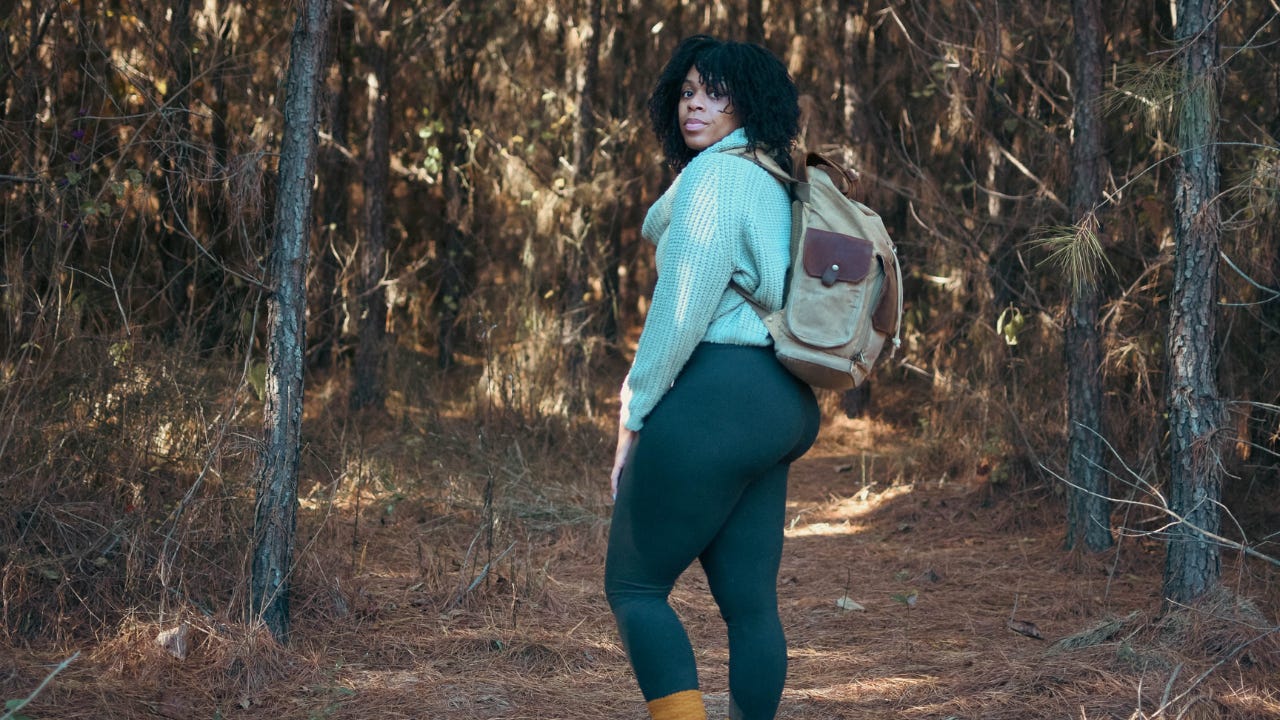
Joyful Movement: As discussed in a 2025 article in SSM - Qualitative Research in Health, cultural norms about body weight and physical activity have created barriers for people in larger bodies to move. Nevertheless, organizations like NAKOA Adventure remind us of the importance of spaces created by and for plus-sized folks. By doing so, we can find joy in various forms of movement, from hiking to surfing, when those activities are created with all bodies in mind.
Self-compassion: Kristin D. Neff explains in an article in the Annual Review of Psychology that self-compassion is not about ignoring our pain, but being mindful about how we’re coping with the stress around us. That means recognizing that even if we “fail” at something, it doesn’t mean that we are a “failure” as a person. Even if eating intuitively or having an enjoyable movement routine isn’t a reality for us right now, we can still show ourselves kindness as we navigate what works best for our body and lifestyle.
As we focus on Discovering the Power of Nutrition, I don’t want us to miss the most important point: the power comes from informed choices about eating and movement that work for your body and lifestyle, not against it.
That means when (not if) you experience challenges, know that you’re absolutely not alone on this journey. I created this community because, when I discovered I wasn’t alone, I knew it was my responsibility to ensure no one else felt they had to figure it out on their own. That said, I know the struggle can be real, and having self-compassion can be difficult for some of us more than others.
If you selected “something else,” could you message me what it is? As we continue to build out monthly themes for 2026, we want to ensure the community letters we write are addressing the actual challenges you’re facing.
In celebration of National Nutrition Month, I’m highlighting some of my favorite recipes that are packed with flavor and nutrient-dense.
There aren’t too many recipes I can eat every day and never tire of. However, this one right here is one of them! Meatified’s Pork & Basil Meatballs in Creamy Thai Green Curry Sauce is by far my absolute favorite recipe to make when I’m craving curry and don’t feel like ordering out. Don’t worry if you don’t eat pork; you can absolutely substitute ground beef, turkey, or chicken.
I often pair this meal with some sauteed kale and white rice. Whatever you choose, this is such a filling meal that you can go back to again and again. It’s also one of the few meals I don’t mind making completely from scratch, because the result is actually worth the time spent in the kitchen. I hope this recipe is a reminder that nourishing meals can be culturally rooted, satisfying, and supportive of our health.
Sidenote: If you have any additional recipes to share with the community, drop them in the comments. Check out the rest of my recommendations on Pinterest!
Until next week,
Tomesha